

Hundreds of animal-rights activists converged on Ridglan Farms’ beagle-breeding facility on April 18 in Blue Mounds. The attempted break-in resulted in approximately 25 arrests, according to the Dane County Sheriff’s Office.
The University of Wisconsin-Madison’s Animal Advocacy organization posted fliers headlined, “Help Save 2,000 Beagles” on April 13, just five days before the break-in. The fliers included a QR code linking to information about an “open rescue” at Ridglan Farms and ways that students could support the beagles’ welfare through advocacy.
University administrators warned Animal Advocacy on April 20 that the fliers appeared to be “soliciting or encouraging individuals to participate in criminal activity” because the linked materials referenced a future rescue attempt, followed by the sentence “Now is when we need to ACT.”
The university formally opened an investigation earlier this year into whether the organization had solicited others to enter Ridglan Farms and remove animals from the property, according to the Foundation for Individual Rights and Expression (FIRE).
FIRE penned a letter to the university in June, arguing that such speech is protected under the First Amendment and that the QR codes did not actually encourage students to break the law. The university found Animal Advocacy “not responsible” for the allegation arising from the “Help Save 2,000 Beagles” fliers.
The group was not sanctioned for the flyer-related solicitation allegation, but it did receive a written reprimand and educational sanction for separate posters placed outside the Mosse Humanities Building. That distinction matters, but it does not answer the question of whether the original investigation deterred protected advocacy.
The Supreme Court has recognized the principle of a “chilling effect,” wherein government conduct discourages individuals from exercising a constitutional right without directly prohibiting a particular action. This was best articulated in Dombrowski v. Pfister, where the Court noted, “the chilling effect upon the exercise of First Amendment rights may derive from the fact of the prosecution, unaffected by the prospects of its success or failure.” Dombrowski involved criminal prosecutions under challenged state laws, not a campus disciplinary process. Its warning that the process itself can burden speech is relevant here.
A university disciplinary investigation is not a criminal prosecution, but it can still impose real costs: meetings with administrators, uncertainty about possible sanctions, and the stigma of being accused of misconduct. Those costs may cause students and student organizations to think twice before engaging in contentious advocacy, even when the university ultimately finds no violation.
That fear is not unfounded. Jackson Ray, the Animal Advocacy president, said the investigation was “a little scary for a lot of students.” For organizations without outside legal counsel, the prospect of a formal investigation may still be daunting. Animal Advocacy was separately found responsible for improperly placing posters outside the Mosse Humanities Building and received a written reprimand and educational sanction. The university said the finding was unrelated to the posters’ content. Even so, when a student group is investigated over political advocacy and disciplined in the same proceeding for a posting-policy violation, the university should clearly explain the distinction and assure students that viewpoint played no role.
The case also raises a broader question about whether UW–Madison’s written guidance gives students enough notice about the difference between protected expression, reportable conduct, and punishable misconduct. FIRE’s Spotlight database identifies several UW–Madison policies that it rates as potentially threatening to constitutionally protected expression. FIRE’s ratings are advocacy assessments, not court rulings, but they raise a question UW–Madison should answer directly: Do its policies give students clear notice of what speech may be reported, investigated or disciplined?
For example, FIRE points to the Office of Student Assistance and Support’s “harassment/discrimination form” and its page on harassment, discrimination, and bias. Although the form appears limited to harassment and discrimination, it also lets students report “unwelcome conduct,” including “microaggressions, slurs, degrading language or intimidation.”
The same page defines harassment and discrimination as “offensive or insensitive acts” targeting someone because they belong to a particular group or protected class. It also lists microaggressions, degrading language, and symbols as examples.
Such broad definitions leave too much room for speculation among students and arbitrary decision-making among administrators. What one student considers a sincerely held opinion may be perceived as a microaggression by another. If a student claims that “homosexuality is a sin” or says that “from the river to the sea Palestine will soon be free,” are they committing a microaggression? Either statement could be considered “insensitive.” Is that conduct “unwelcome,” discriminatory, and/or harassing?
No one can be sure. That uncertainty also chills speech. It would not be unreasonable for an evangelical or pro-Palestinian student to ask, “Can this opinion get me in trouble?” Or, at the very least, “Will voicing this opinion result in me being investigated?”
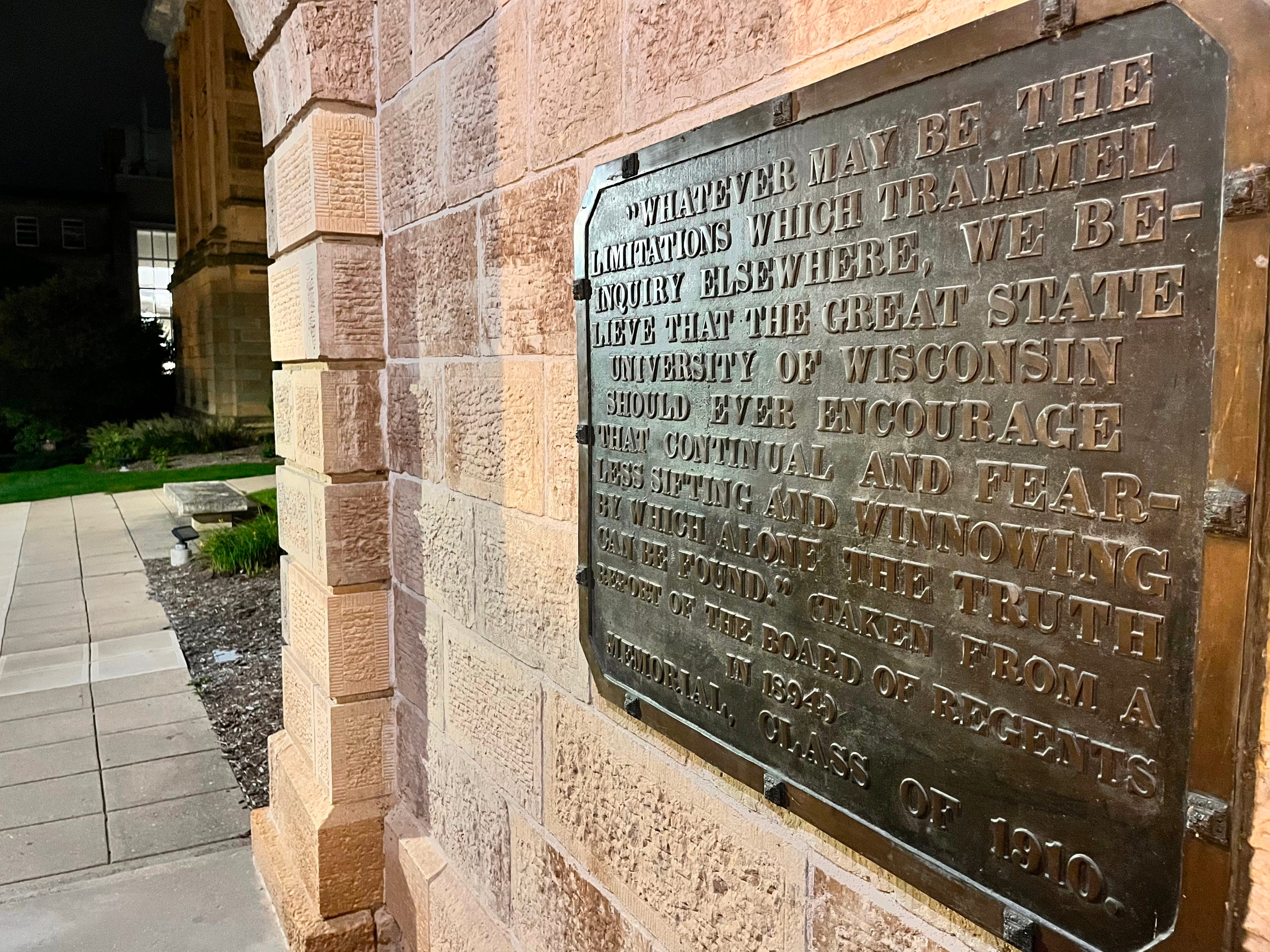
For a university that has long championed the principle of “sifting and winnowing,” and supposedly prides itself on its dedication to “the principles of free speech and free expression” and its commitment to “the free and open exchange of ideas through expressive activity,” its commitment to those principles often seems to end at a cursory glance. Investigations, ambiguous policies, and uncertainty have sowed doubt and made students more hesitant to exercise their right to free expression. It’s time for the university to uphold its own values and engender confidence in them.
