

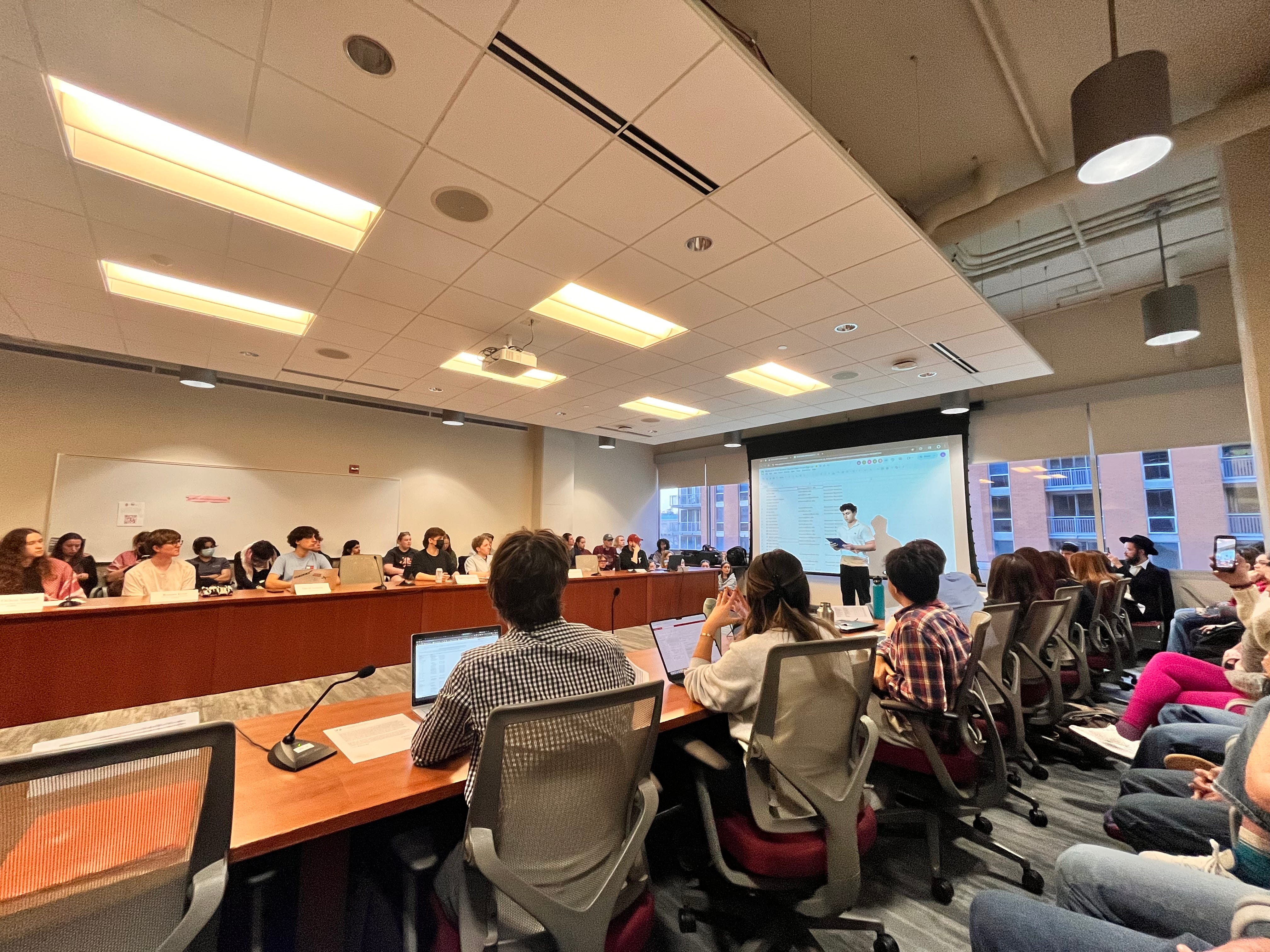
The Associated Students of Madison passed a controversial resolution prohibiting the organization from “doing business in any way with companies complicit in apartheid and genocide, including Israel’s genocide of Gaza” and calling for the UW System to do the same. It has sparked condemnation from Jewish students, UW Hillel, and UW-Madison itself.
On Wednesday, March 25, the ASM voted 15-5-3 on a resolution that calls for divestment from companies that engage in “discriminatory practices such as apartheid, genocide, and militarized violence.” It accuses Israel of “genocide” and “maintaining a system of apartheid,” but does not reference any violence by Hamas or the Palestine Liberation Organization.
Other states or organizations called out in the resolution include the Rapid Support Forces in Sudan and the United Arab Emirates. Israel was referenced 15 times in the resolution, which is more than any other states. Iran and Venezuela are mentioned in the resolution, but only to criticize the United States’ “unprovoked” military action that removed their respective dictators from power.
Speaking at Wednesday’s meeting, Jewish UW student Ariav Hayempour said “The bill proposed will hurt Jews and Israelis of all identities on this campus.” He said, “A lot of antisemitism is excused because it’s shrouded in language related to Israel. When the Jewish community tells you what you’re doing will hurt me and is hurting me, we’re met with a shrug in silence.”
Hayempour asked, “How can one claim to believe in inclusion and equality, but selectively pick which groups deserve that?”
After Hayempour concluded, a large group of Jewish students applauded his speech and walked out of the room together. Reuven Weinstein, a UW-Madison student, told The Federalist, “We reconvened at the Hillel on campus for dinner and enjoyed the beautiful weather rather than sitting in a stuffy room for hours listening to accusations and attacks from strangers and so-called friends alike,” he said. “As Jews, we are not strangers to hatred, but we rise above it and fight back by speaking up for ourselves, not putting up with hate, and living our lives freely and without fear.”
During open debate between ASM representatives, Michael Harry noted that China and its treatment of the Uyghurs was not mentioned once in the resolution. Elizabeth Anderson felt that the resolution contained unnecessarily controversial language. Jianda Ni said the university should adopt more morally responsible investment practices, but that the resolution’s focus on Israel could increase the risk of harm for Jewish students.
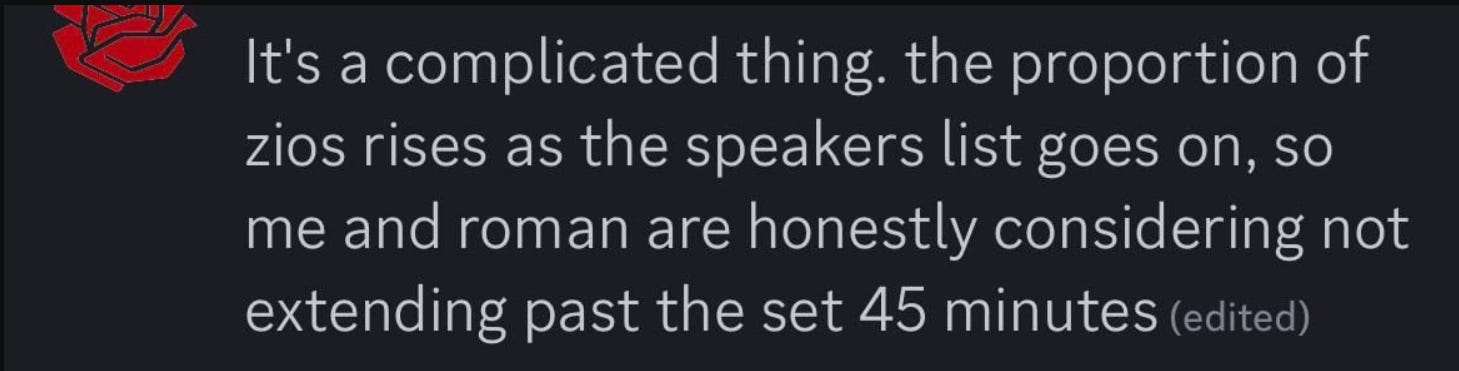
At the previous week’s ASM meeting, a message from ASM representative Gabo Ochoa-Samoff that read “”the proportion of zios rises as the speakers list goes on” was leaked from a group chat. Multiple speakers condemned Samoff for using the term, and he apologized during open debate, noting that he is Jewish.
ASM representative Amitabha Shatdal proposed an amendment that would have struck references to specific countries in the resolution. ASM chair Landis Varughese did not allow the amendment to go to a vote because he felt it was too substantial. Shatdal said, “This kind of action on the behalf of our chair does not seem becoming of an impartial representative.” Varughese pushed back, saying, “You guys can overrule what I do via two thirds [vote.]”
The resolution, which cites links from Qatari media organization Al Jazeera and multiple left-wing interest groups, was endorsed by organizations including BLK Power Coalition, Students for a Democratic Society, and Mecha de Teejop. Sex Out Loud endorsed the resolution and said, “As a sex-positive student organization, we know that we cannot truly celebrate autonomy, empowerment, and equity until the liberation of all people is achieved.”
The resolution also criticized UW System index funds for including corporations that “contract with the United States Immigration and Customs Enforcement (ICE) to develop data systems, surveillance, and policing tools used in immigration enforcement and deportation operations.”
After the resolution passed via a roll call vote, the room erupted with cheers. UW-Madison released a statement shortly after and said it was disappointed that ASM “passed a resolution on Wednesday that issued a number of flawed, unrelated and illegal demands.”
READ MORE FROM THE MADISON FEDERALIST:
UW Grants Housing Accommodation to Jewish Student After Legal Threat
As Antisemitism Rises, New Campaign Confronts Hate On Campus
“Wisconsin state law prohibits state and local government agencies from adopting their own rules or policies that would involve them in a boycott of Israel,” the statement said. “Despite the fact that ASM leadership was counseled by university attorneys on the clear illegality of that specific part of the resolution, ASM Student Council nonetheless voted to pass it.”
At the previous ASM meeting, UW-Madison Dean of Students Christina Olstad informed the ASM that the university viewed the resolution as in violation of Wisconsin state statute 20.931, which prevents state agencies from boycotting Israel.
ASM representative Roman Fritz contended that the resolution was not illegal. He read a statement from attorney Oren Jakobson that said, “Refusing to deal with or terminating business relations with any nations, organization, business, or person practicing or condoning through its actions discrimination on the basis of race, religion, color, creed or sex is at times lawfully mandated – see Wisconsin Statute 36.29(1) – and at all times lawful.”
In an emailed statement to The Madison Federalist, UW Hillel director of community relations Aaron Seligman said the organization is “deeply disappointed that ASM voted to pass the antisemitic BDS resolution.” He continued, “BDS campaigns are not constructive policy discussions. They are efforts to normalize antisemitism and target Jewish students. We will continue to support a thriving Jewish community at UW-Madison.”
Professor Chad Goldberg told The Federalist that he was grateful for the university’s “unequivocal statement condemning antisemitism.” He is proud “of the Jewish student leaders who organized, showed up to the ASM meeting, and spoke out with clarity and courage.” Goldberg, who serves on the board of directors at UW Hillel, said he fully endorsed the organization’s statement.
“I do not believe this resolution reflects the views of the majority of students at University of Wisconsin–Madison,” said Sophie Genshaft, the president of Hillel’s student organization on campus. She told The Federalist, “Student government is meant to address issues that directly impact student life, and this resolution instead takes a stance on a complex international issue that many students neither feel represented by nor asked about. It’s a misalignment of priorities and does not accurately capture the full range of student perspectives on this campus.”
While some of those who spoke at the ASM meeting in favor of the resolution identified themselves as Jewish, Genshaft said the response “has been one of deep frustration and concern” across the Jewish community. “This resolution has made many Jewish students feel singled out and uncomfortable on their own campus. While individuals may hold a range of views on Israel, what is unifying right now is a clear need to stand together for freedom, democracy and also against the growing normalization of antisemitism.”
Jewish students also started a petition that has gathered nearly 400 signatures to condemn the resolution.
Ian Braun, a Jewish freshman, told The Federalist that some who support the resolution “genuinely believe in the things that this bill says and will do,” but “antisemitism is a factor.” Erika Klein, another Jewish student, believed the ASM is “compromising the safety” of Jewish students on campus and argued that BDS resolutions are correlated with spikes in antisemitism.
The university said “resolutions that call for actions that would violate the law do not warrant further engagement.” It noted that ASM resolutions do not set policy for UW-Madison, the Board of Regents, or the Wisconsin Foundation and Alumni Association.