

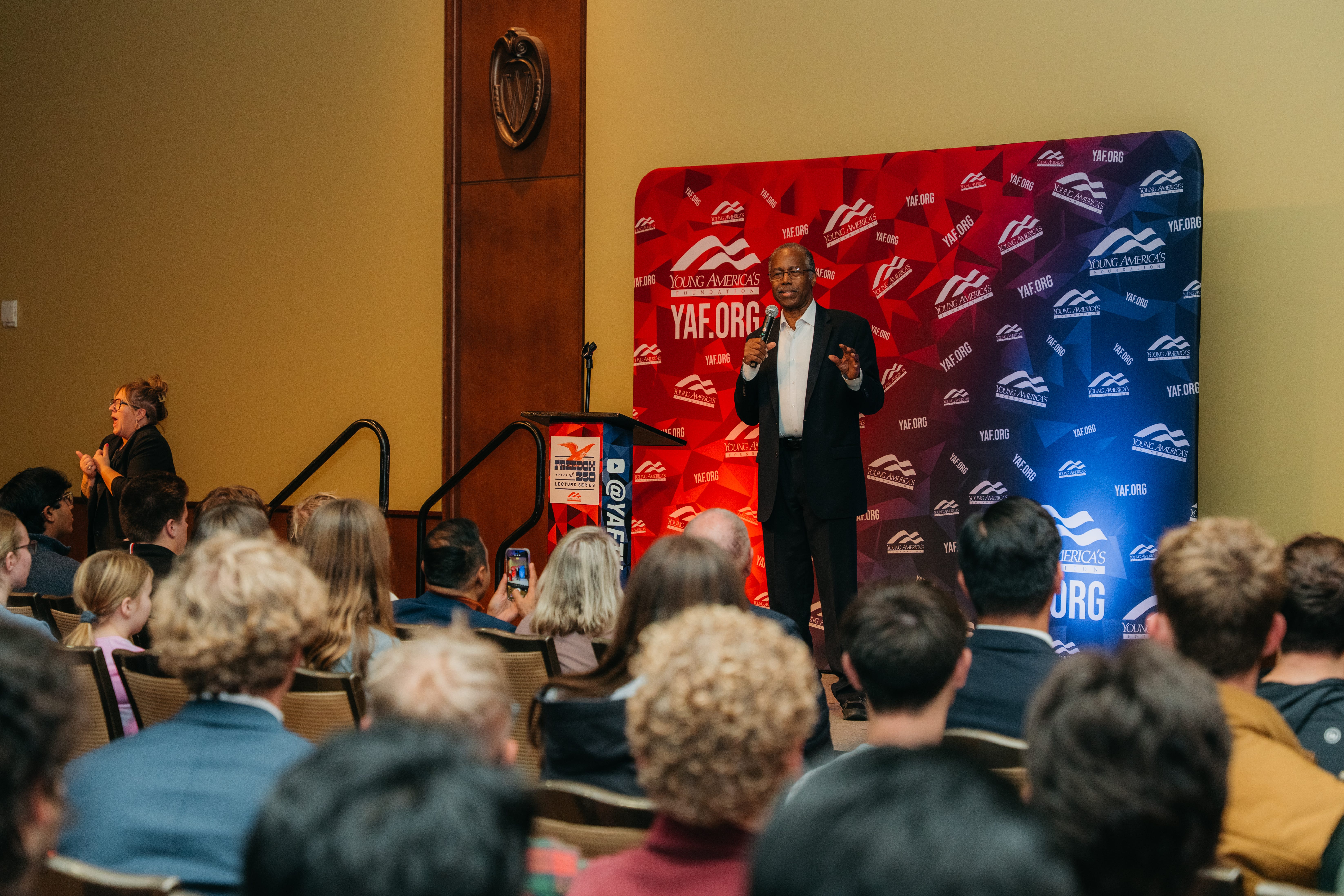
Former U.S. Housing and Urban Development Secretary Ben Carson urged a UW-Madison audience on Nov. 9 to preserve the American dream through personal responsibility, faith and community, drawing on his rise from poverty while warning against what he described as the growing influence of socialism.
“Did you ever stop to think about the fact that America is the only country that has a dream?” Carson asked in his opening remarks. “The person who has the most to do with what happens to you in life is you.”
The neurosurgeon spoke in Varsity Hall II at Union South. His talk, titled “The American Dream is Alive,” was hosted by the Center for Research on the Wisconsin Economy and Young Americans for Freedom, with funding in part from the Wisconsin Exchange.
Carson began by describing his experiences growing up in poverty. He recalled living in multifamily homes with boarded-up windows and encountering rats and gang violence. One particularly difficult point in his childhood, he said, came when his “two favorite older cousins” were killed.
Despite dreaming of becoming a doctor, Carson said he was at the bottom of his class and felt helpless about his circumstances.
His mother, however, never gave up. Carson described a turning point when she prayed for wisdom and decided to require her sons to read two books a week from the Detroit Public Library and submit written reports. Within a year and a half, he said, he went from the bottom of his class to the top.
“I didn’t like it very much at first,” Carson admitted, “but after a while I began to enjoy reading. We never had money for anything, but between the covers of those books, I could go anywhere.”
Carson said this newfound love of reading taught him a sense of self-determination.
“It was within my own ability to do whatever I wanted to do,” he said.
Poverty, he explained, no longer felt like an insurmountable barrier. He credited his mother with teaching him not to make excuses and described faith as another important part of his journey to becoming a neurosurgeon.
“When things looked bleak,” he said, “I prayed, I prayed for wisdom.”
Carson presented his experience as evidence that the American dream remains attainable, pushing back against narratives suggesting it is no longer possible.
He warned against what he described as a growing tendency to focus on society’s shortcomings while overlooking its strengths. Americans, he argued, often emphasize injustices in the country’s history, such as slavery, without giving sufficient attention to the principles of liberty and self-determination that he said made it the “greatest country” to live in.
Carson also alleged that communist-aligned groups have sought to indoctrinate college students for at least 70 years, encouraging young Americans to view the American dream as unattainable. He argued that influence over the news media and Hollywood could be used to reshape the country’s values.
“You can change the moral codes in America,” he said.
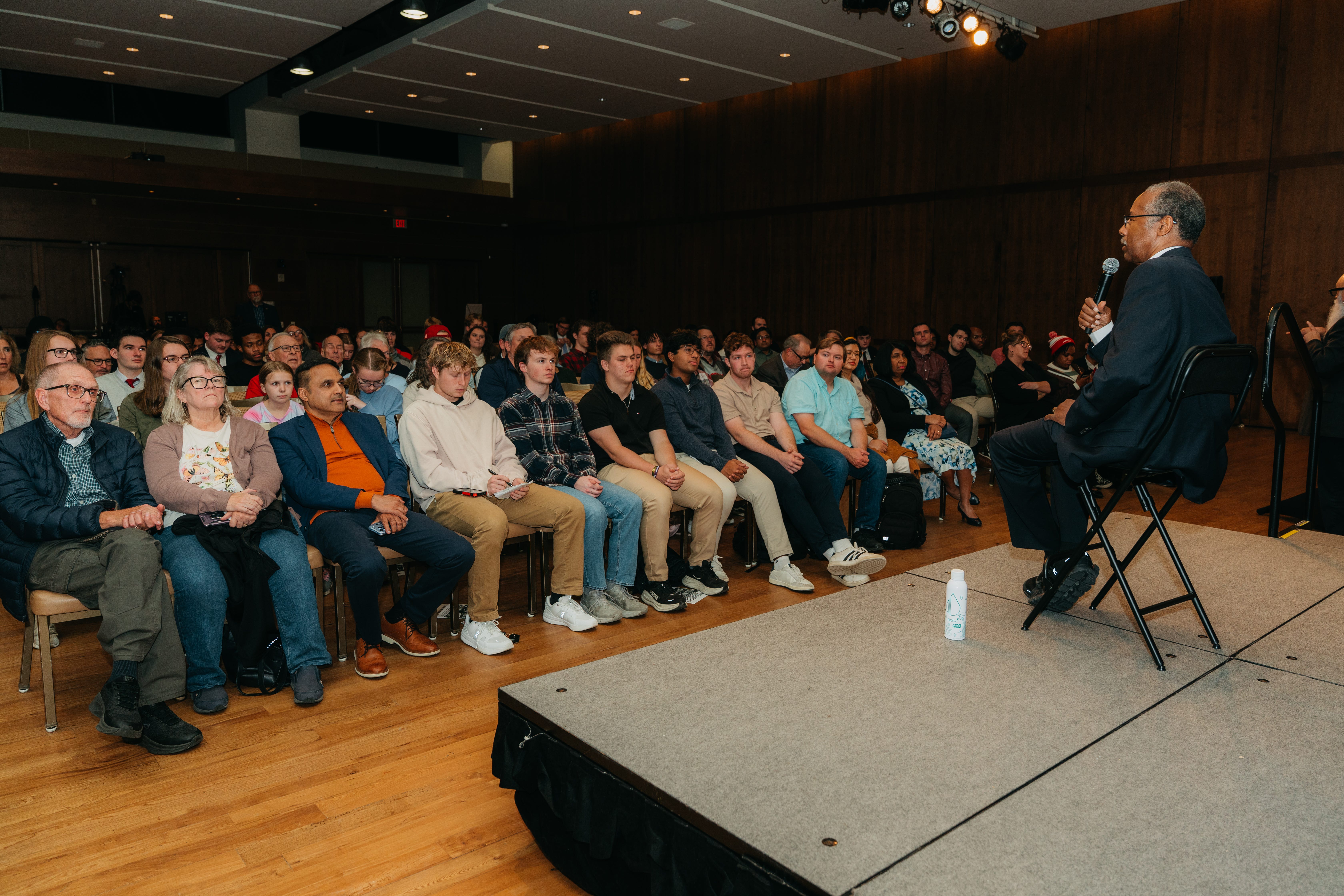
He connected that argument to what he described as efforts to normalize “sexual perversion,” diminish fathers’ role in families and replace the gospel in churches with a “social gospel.” Carson presented those changes as examples of attempts to erode the values he associates with the American dream.
Turning to socialism, Carson warned listeners against surrendering their freedoms because “somebody says they’re going to take care of you from the cradle to the grave.”
“The end goal of socialism is communism,” he said.
Carson argued that the best response is to uphold the principles he credits with creating the American dream, including liberty, Christian values and a strong sense of community. He said those values encourage people to love their neighbors rather than hate or “cancel” them.
Americans, he added, must preserve the “freedom to live the life that you want to live.”
Carson closed by encouraging those in attendance to hold firm to their beliefs and preserve for future generations the opportunities past generations provided.
“It’s our turn to step up with courage,” he said, “to make America a place that we want to give to those who come after us.”
