

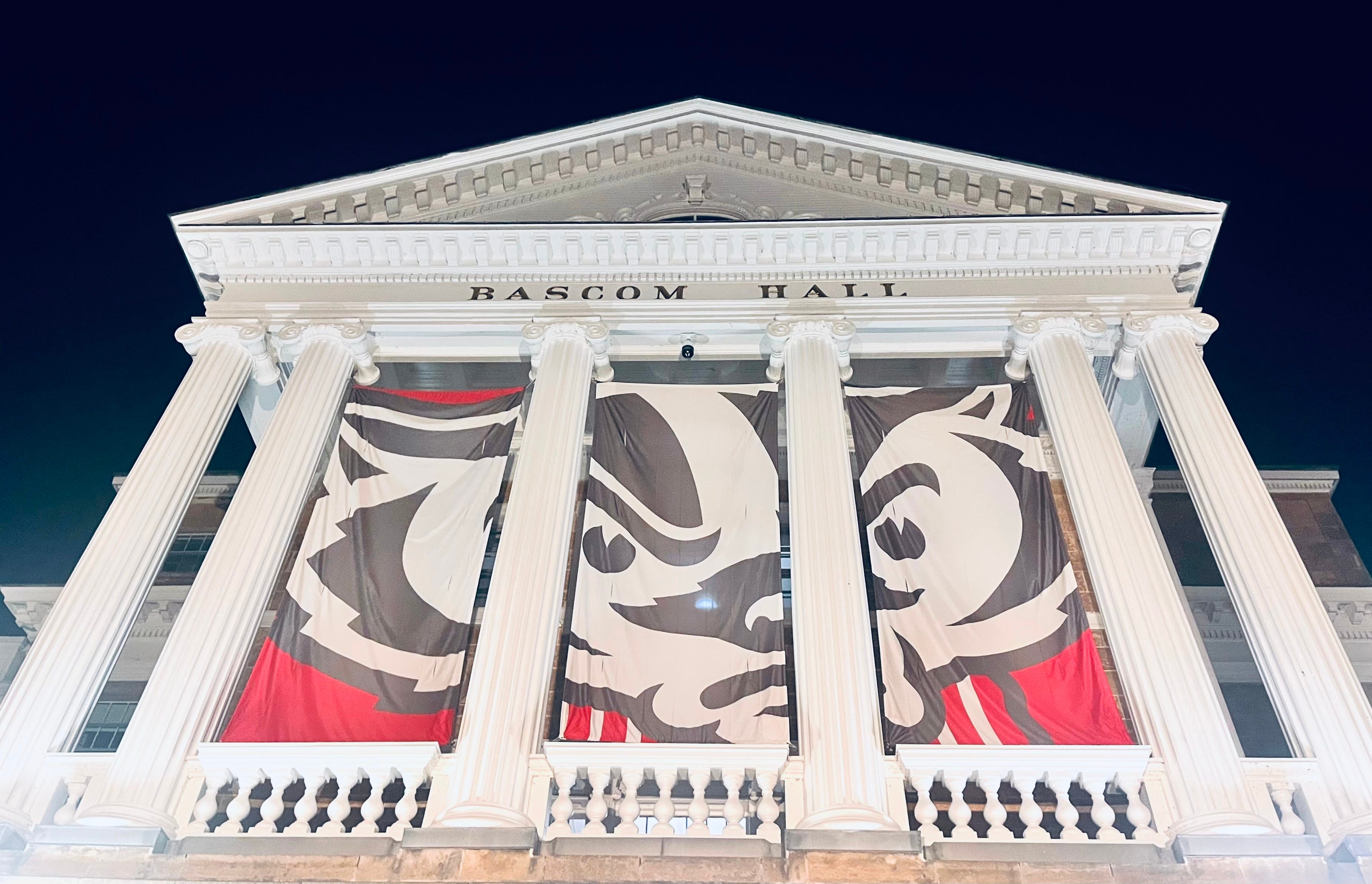
Despite shuttering its central diversity, equity and inclusion division, the University of Wisconsin-Madison has preserved many DEI-focused offices, committees, and ideological statements on campus.
In July 2025, UW-Madison Chancellor Jennifer Mnookin announced that the Division of Diversity, Equity, and Educational Achievement would close. This decision came after a financial scandal involving former chief diversity officer LaVar Charleston, a legislative audit that found UW-Madison had failed to track DEI spending, a deal with the legislature to limit DEI programs, and new federal directives that threatened university funding.
However, many of UW-Madison’s schools and colleges have retained explicit commitments to DEI on their websites, including the Law School, the College of Letters and Science, and the School of Business.
The Law School’s strategic priorities include being a “campus and national leader in promoting diversity, equity, and inclusion, with an emphasis on racial and social justice.” This includes having “a senior leadership position dedicated to diversity, equity, and inclusion” and launching “anti-racism initiatives.” It also promises to “provide educational opportunities to faculty, staff, and students on what we can do to advance racial justice and develop a more inclusive and equitable learning environment.”
The College of Letters and Science maintains an Office of Inclusive Excellence and Organizational Equity and an Inclusive Excellence Committee. A message from Dean Eric Wilcots, who will become the Interim Chancellor of UW-Madison in May, says the college is “resolute in our commitment to access, diversity, equity, inclusion, and belonging.”
The School of Business embraces “diversity, equity, and inclusion at our core.” It also maintains a Multicultural Center, which its director says “promotes diversity, equity, and inclusion and supports underrepresented students, particularly students of color.”
The School of Nursing’s “2026-2031 Inclusive Excellence Plan” is a 13-page document that defines inclusive excellence as “a framework that fosters a transformative environment valuing diversity, equity, inclusion, belonging, and mattering.” The School of Social Work’s website lists a similar “Strategic Plan for Diversity, Equity, and Inclusion.”
The College of Agricultural and Life Sciences maintains an Equity and Diversity Committee that holds monthly meetings. It advises the dean on initiatives, including “recruitment and retention of minority students; minority student programs; retention programs for at-risk students.” It also performs “reviews of specific complaints of inequity.”
The School of Education maintains a Center for Community and Well-Being with six staffers, which operates the same office space as the school’s former Office of Equity, Diversity, and Inclusion. The school also has a Community and Well-Being Committee.
The Division of the Arts “commits to removing all oppressive systems and ideologies within our organization, which requires an equitable distribution of resources, shared power, and shifts in institutional practices that uphold white supremacy and other discriminatory ideologies.” It vows to center DEI in “all of our programming and practices.” It also references an Inclusion, Diversity, Equity, and Access Committee, but it is unclear if it is still active.
The Information School’s website has a “Diversity, equity, inclusion, accessibility and belonging statement” and references a DEIA committee. The school also offers the iSchool Diversity Internship Award, with selection criteria including “opportunities to increase diversity of representation in the field based on race, ethnicity, gender, gender identity and expression, sexual orientation, socioeconomic status, and/or (dis)ability.”
The School of Veterinary Medicine maintains a Diversity, Equity, and Inclusion Fund and a Diversity, Equity, and Inclusion Scholarship Fund. The School of Computer, Data, and Information Sciences lists multiple “Diversity and Inclusion Programs” on its website. The International Division has an “Equity and Diversity Collective” that advises its dean on DEI issues, and the Nelson Institute for Environmental Studies maintains a Welcoming and Inclusive Nelson Committee.
Within the schools and colleges, various departments have maintained separate commitments to DEI. Dozens of them list diversity statements on their websites, including the departments of Integrative Biology, Psychology, Medieval Studies, and Dairy Science.
Departments that reference DEI committees on their websites include Agricultural and Applied Economics, Political Science, Anthropology, Atmospheric and Oceanic Sciences, Kinesiology, Geography, Geoscience, Botany, Plant Pathology, Communication Arts, Communication Sciences and Disorders, Pediatrics, Food Science, Anesthesiology, Physics, Nutritional Sciences, Computer Science, Genetics, Economics and Ob-Gyn. Some of the committee lists are outdated while others are current. UW-Madison did not respond to email inquiries from The Federalist to clarify which committees are active.
Some university-wide DEI initiatives similarly persist. For example, instructors are “strongly encouraged” to include a “diversity and inclusion” statement in their syllabi. Additionally, students are required to take an ethnic studies course to graduate.
As originally reported by The Federalist, the university created a new position called “special advisor for access and community” in April 2025. Percival Matthews, who previously directed the School of Education’s OEDI office, was selected for the role. Matthews co-authored a paper in 2024 that suggested mathematics education in the U.S. was racist and had a long history of inflammatory Facebook posts.
The university’s continued DEI practices have frustrated many Republicans in the state legislature. Rep. Dave Murphy, chairman of the Assembly Committee on Colleges and Universities, said UW-Madison is “absolutely not committed” to ending DEI in an emailed statement to The Federalist. In a subsequent phone interview, he said UW-Madison is “spending an awful lot of money” on DEI initiatives that get “no return on investment.” He believes “universities need to operate on merit, and fairness, and equality,” but DEI initiatives hinder this.
In 2023, UW-Madison agreed to realign some DEI positions and cap future ones in an agreement with the legislature. University director of public affairs Gillian Drummond told The Federalist, “UW-Madison has met and surpassed its share of the DEI reimagining commitment.”
However, Murphy noted the agreement also included a promise by the university to “seek philanthropic support to create an endowed chair to focus on conservative political thought, classical economic theory, or classical liberalism.” The most recent update to that search came in November, when Mnookin told The Federalist that the university had not yet raised the funds for the position.
In the months before the DDEEA’s closure, the division was embroiled in controversy after an internal audit found that its director, LaVar Charleston, “showed a lack of recognition and appreciation for the university’s responsibility to be sound stewards of state funding and the public trust.” This included handing out more than $200,000 in “lump sum awards” to DDEEA employees “without consultation.” A later audit by the state legislature found that the Universities of Wisconsin did not track millions in DEI spending.
Drummond said UW-Madison has since “implemented additional controls for compensation adjustments, is conducting more frequent budget and financial reviews, added additional reporting relationships between divisions and the Office of the Vice Chancellor for Finance and Administration, and has new limits on carryover balances.”
In addition, the university paid Deloitte to audit its fiscal and budgetary controls, and the firm’s report “affirmed our policies are sound.” UW-Madison is “implementing some of Deloitte’s suggestions to foster additional shared accountability, further enhance policies and processes, increase training and transparency, and balance roles for central administrative units as well as those located within units, schools and colleges.”
At the time of the DDEEA’s closure, the unit had 98 employees. Seven of them have lost their jobs, but 91 are still employed by the university. According to The Center Square, nearly all of them have kept their same job titles– including nine whose job titles explicitly included “diversity” or “DEI.” Several of them have salaries in excess of $100,000. Notably, Charleston is still employed by the university.
Drummond told The Federalist, “Many former DDEEA employees were responsible for scholarship-linked student support programs, state, and federal required employee support or compliance functions, and institutional data collection. These types of programs continue to exist and are working to further broaden or revision programming within their new units.” She said the university “continues to engage in collaborative efforts across campus to reimagine programming in ways that enhance pathways to success for all UW-Madison students, faculty, and staff, and remains in compliance with applicable state and federal laws.”
In January, the Wisconsin Institute for Law and Liberty filed a Title VI complaint with the U.S. Department of Education alleging that UW-Madison offers at least 22 race-based scholarships. As a recipient of federal funding, UW-Madison must comply with Title VI, which prohibits discrimination on the basis of race, color, or national origin.
UW-Madison was also one of 45 colleges investigated by the Department of Education “for allegedly engaging in race-exclusionary practices in their graduate programs.”
While DEI initiatives have continued, the university has also launched the Wisconsin Exchange to “enhance viewpoint diversity at UW–Madison, to promote vigorous discourse and debate, and to intensify our campus culture of civil dialogue.” The Exchange will host speakers of various backgrounds starting this semester, including Foundation for Individual Rights and Expression CEO Greg Lukianoff.
While Murphy believes the Exchange signals that the university may take concerns about ideological diversity more seriously, he fears it could be “window dressing to placate legislators who complained about DEI.” He hopes that more right-leaning speakers will be brought to campus, but believes more “systemic” change is needed.
The Exchange’s current initiatives include Deliberation Dinners, Bridging the Divide, BridgeUSA and the Pluralism and Unity Advisory Council. The Exchange is also partnering with the Ronald Reagan Presidential Foundation and Institute to host a “Common Ground Forum” on campus. Mnookin told The Federalist she hoped there would eventually be a curricular dimension to the Exchange, including courses. A postdoctoral fellowship program “for those whose scholarship and teaching seek to understand or advance the practice of viewpoint diversity and pluralism” will also begin in fall 2026.
Although UW-Madison’s central diversity, equity and inclusion division was eliminated, the continued presence of DEI-focused offices, committees, statements and personnel across its various schools, colleges and departments indicates that DEI remains deeply embedded in campus life.
Unacceptable. Defund them.