

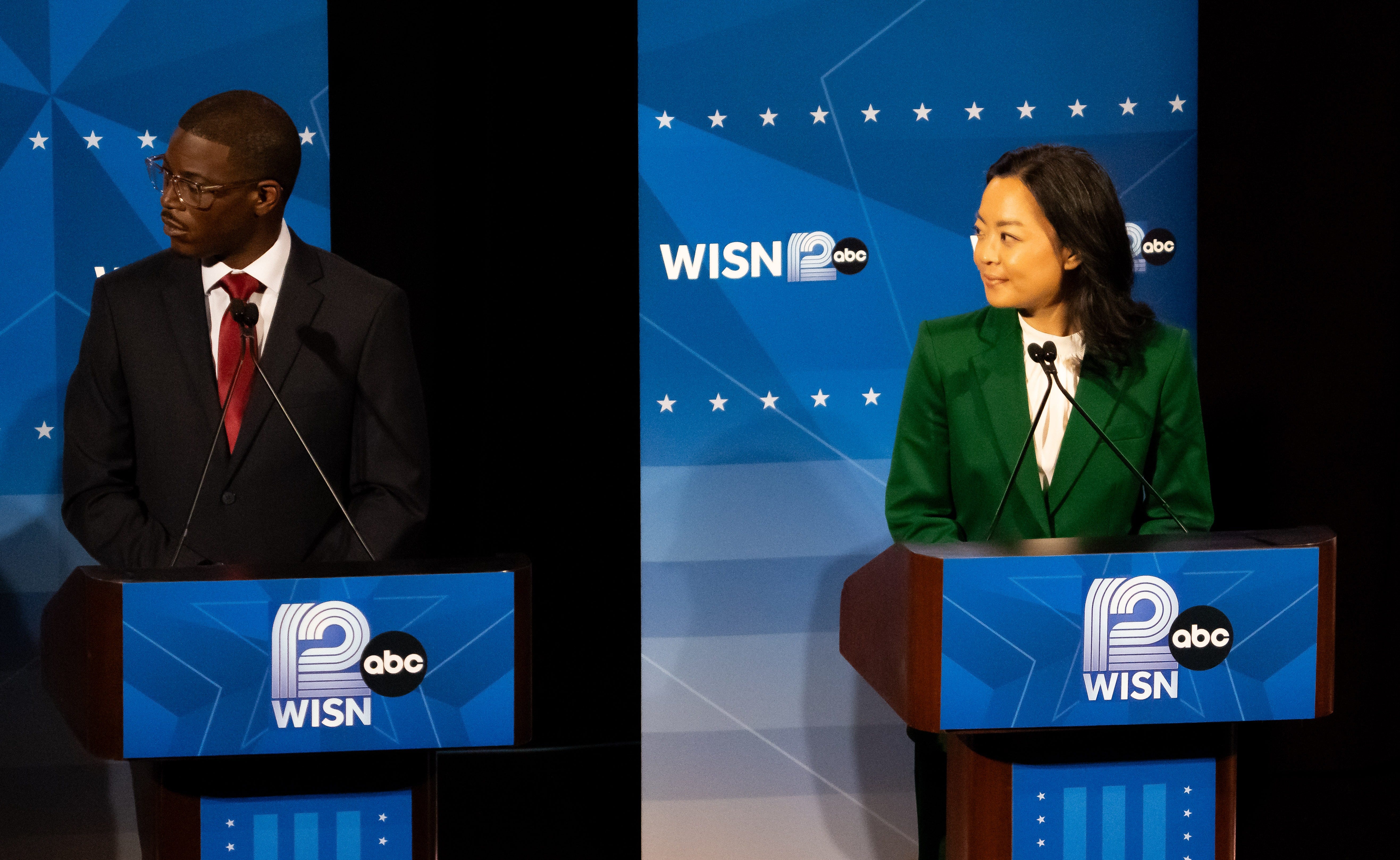
Democratic nominee for governor David Crowley supports granting in-state college tuition to illegal immigrants. This harmful and expensive policy would allow people in the country unlawfully to reap the same benefits as hardworking, taxpaying Wisconsinites. By giving special advantages to foreigners that law-abiding U.S. citizens do not have, this policy would put Wisconsin last.
During a gubernatorial primary debate on June 22, Crowley indicated his support for providing in-state tuition to illegal immigrants, alongside Francesca Hong and the other Democratic candidates. Under current University of Wisconsin residency guidance, no undocumented student or Deferred Action for Childhood Arrivals recipients may receive in-state tuition or financial assistance to attend a public university in the state.
This issue highlights the difference between the gubernatorial candidates’ visions for the state: While Republican nominee Tom Tiffany has maintained a Wisconsin-first stance, Crowley has done the opposite.
“Wisconsin taxpayers should not be forced to subsidize in-state tuition for people who are in this country illegally,” Tiffany said in a statement to The Madison Federalist. “Crowley’s position is another example of putting benefits for illegal immigrants ahead of the taxpayers who are footing the bill. As governor, I will oppose efforts to provide taxpayer-subsidized in-state tuition to illegal immigrants and work to ensure Wisconsin’s higher education system puts Wisconsin students and taxpayers first.”
A spokesman for Crowley’s campaign did not return a request for comment from The Federalist.
State taxes made up around 17 percent of the operating budget for the Universities of Wisconsin, and federal grants made up around 20 percent in the 2024-25 year . Undocumented immigrants should not be receiving the same privileges, including a discounted educational system, that legal Wisconsin and U.S. citizens are subsidizing.
Governor Tony Evers’s 2019 budget proposal included in-state tuition for illegal immigrants. This was eventually killed by the legislature. Illegal immigrants and DACA recipients were barred from receiving in-state college tuition by a bill signed in 2011 by former governor Scott Walker. This reversed a short-lived policy from the 2009-2011 biennial budget that granted in-state tuition to illegal immigrants who had graduated from a Wisconsin high school, lived in the state for three years, and filed an affidavit promising to apply for a permanent resident visa as soon as they became eligible to do so.
Proponents of granting in-state tuition to illegal immigrants argue that because they have lived in our state for a majority of their lives, they should be granted the same privileges. However, this only incentivizes breaking the law and would potentially encourage more illegal migration to Wisconsin with the promise of a cheap education.
The U.S. Department of Justice argues that such policies violate federal law, and attempts by other states to grant undocumented immigrants in-state tuition have already been challenged by the DOJ. The DOJ has had wins overturning state laws that gave in-state tuition to undocumented immigrants in the district courts governing Texas, Kentucky, Nebraska, Oklahoma, Kansas, and Illinois.
The Department of Justice has filed lawsuits against 24 states and Washington D.C. challenging laws that provide in-state tuition and financial assistance to undocumented students. This means it has sued every jurisdiction with this type of policy. The DOJ argues that these laws conflict with Section 505 of the Illegal Immigration Reform and Immigrant Responsibility Act of 1996 and the Constitution’s Supremacy Clause.
Assistant Attorney General Brett A. Shumate, who currently leads the Civil Division of the DOJ, stated that laws granting in-state tuition to undocumented immigrants in these cases are a simple matter of federal law: “Colleges cannot provide benefits to illegal aliens that they do not provide to U.S. citizens.”
Based on the position of the DOJ and the 1996 law, it is likely that any proposal by a potential Crowley Administration to seek a change in Wisconsin’s tuition residency law would also be challenged by the Trump Administration. If the state attorney general’s office is forced to defend these laws, it would be more taxpayer dollars wasted.
The future of Wisconsin’s higher education system will be decided on November 3. Tom Tiffany believes that the University of Wisconsin System should work to serve Wisconsinites first, while David Crowley’s support of illegal tuition equity would undoubtedly put Wisconsinites last.
